- Home
- About
- Academics
- Admission
- Facilities
- Centers/Cells
- IQAC
- Coaching for Entry in Services
- Career Counselling & Placement Cell
- Information and Technology Cell
- UGC Cell
- Women’s Cell
- Entrepreneur Development Cell
- Computer Training Centre
- IGNOU Study Centre
- Remedial Coaching Centre
- Internal Complaints Committee (ICC)
- Right to Information Cell (RTI-Cell)
- Yoga & Wellness Centre
- Student Life
- Editorial Venture
- Alumni
- Gallery
- Informations
Update Details
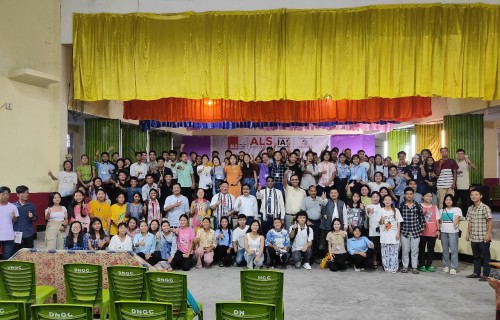
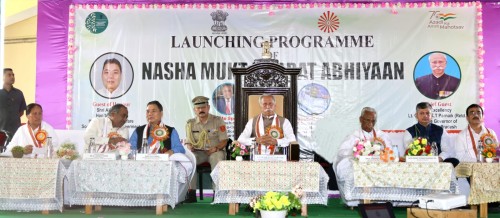
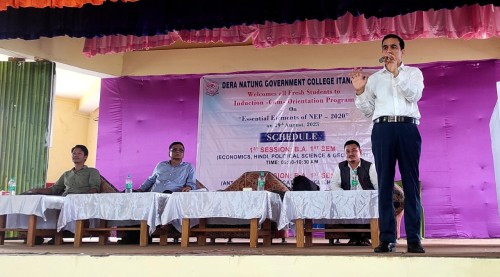
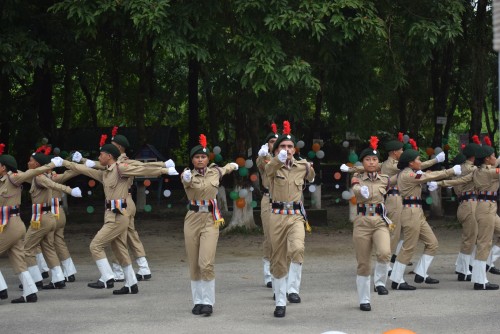
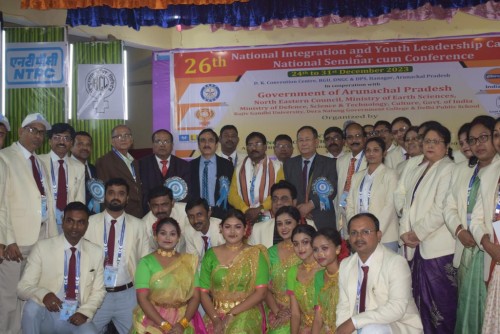
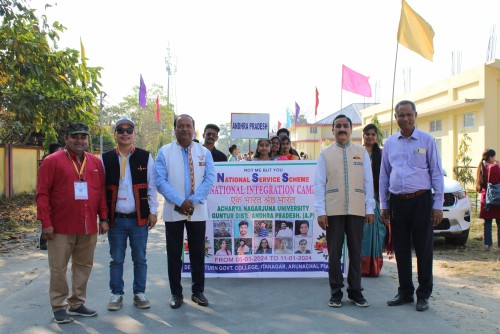
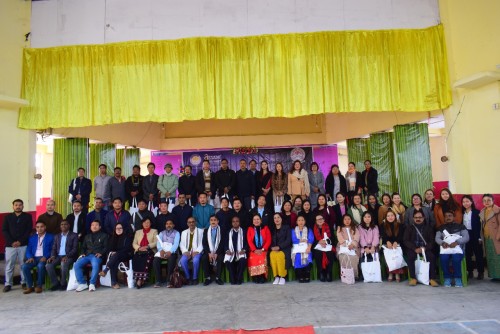
North East Educators Conclave on “National Education Policy (NEP) and its implementation”
31st January, 2024 Read More
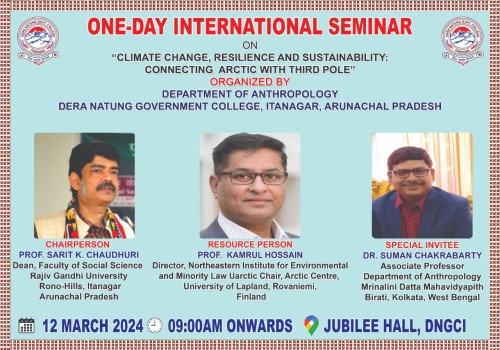
A one-day International Seminar on "Climate Change, Resilience and Sustainability Connecting Arctic with Third Pole"
12th March, 2024 Read More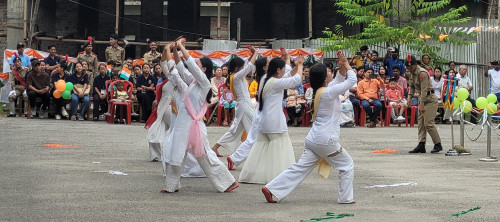

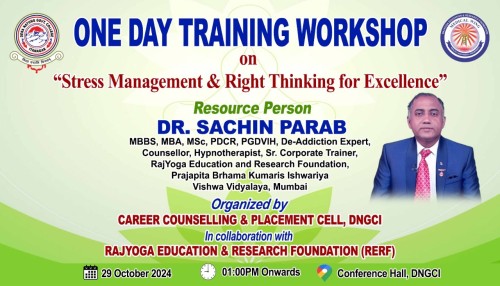
One-day training workshop on the theme ‘Stress Management and Right Thinking for Excellence’
29th October, 2024 Read More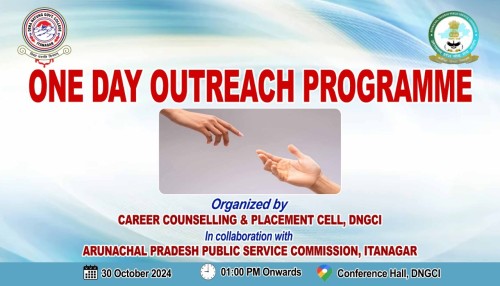
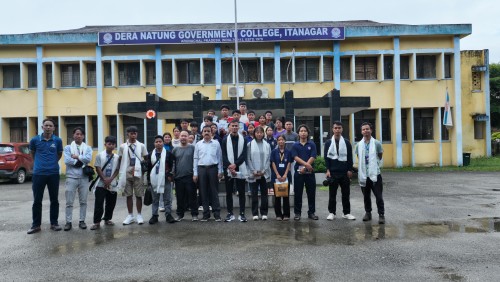


NCC Unit DNGC Organises Blood Donation Programme on Univeral Brotherhood Day
25th August, 2025 Read More


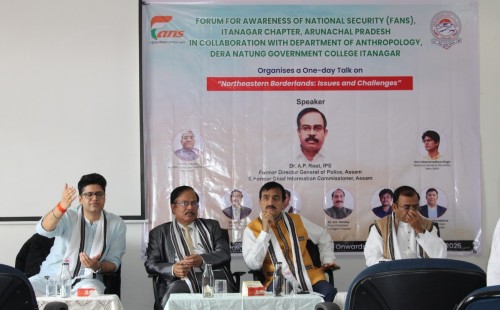


One Day Workshop on AI, IoT & Drone Technology on the occasion of National Science Day 2026
28th February, 2026 Read More

Workshop-cum-Paper Presentation on the Occasion of International Women’s Day
8th March, 2026 Read More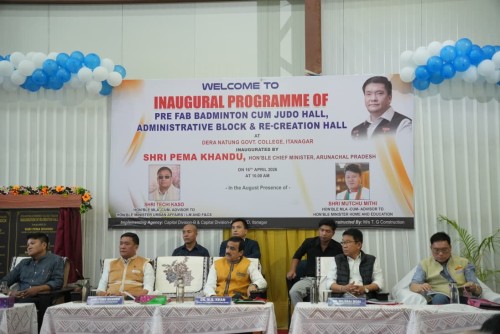
DNGC Inaugurates Badminton-cum-Judo Hall, New Administrative Block and Recreation Hall
16th April, 2026 Read More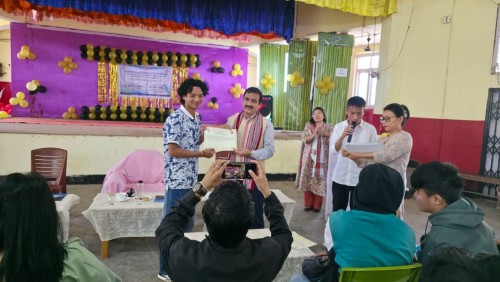
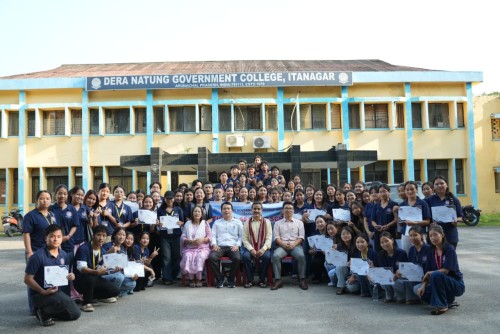
Workshop on AI, Cyber Security and Digital Forensics Held at DNGCI
28th Apr, 2026, 09:51 am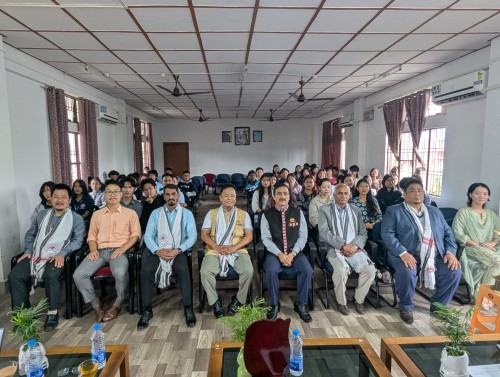
Date: 27.04.2026
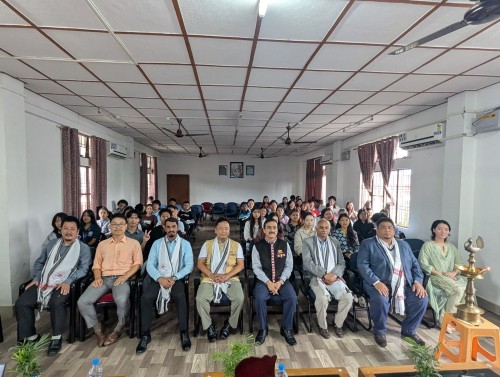
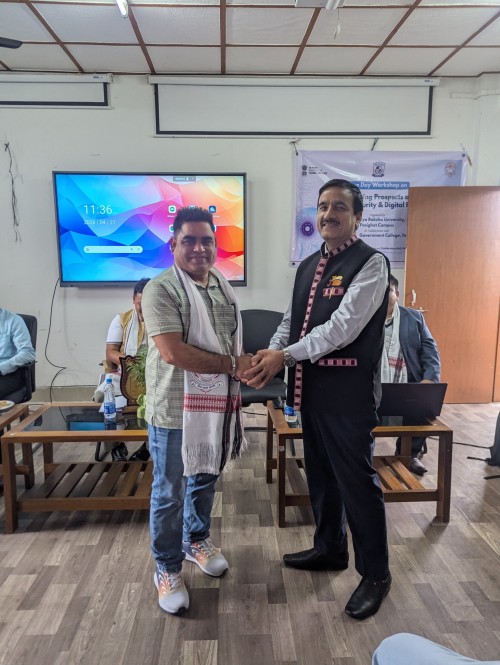
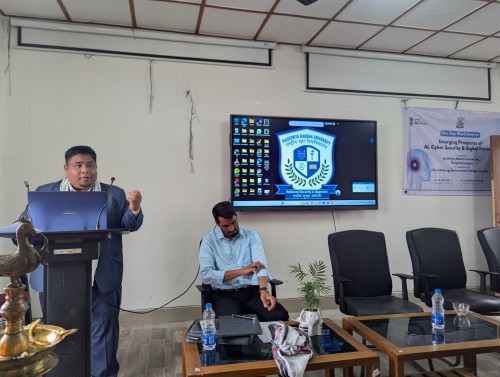
A one-day workshop on “Emerging Prospects of Artificial Intelligence, Cyber Security and Digital Forensics” was successfully organised at Dera Natung Government College (DNGCI), Itanagar, on April 27, 2026. The programme was jointly organised by Rashtriya Raksha University, Pasighat Campus, under the Ministry of Home Affairs, Government of India, in collaboration with Dera Natung Government College.
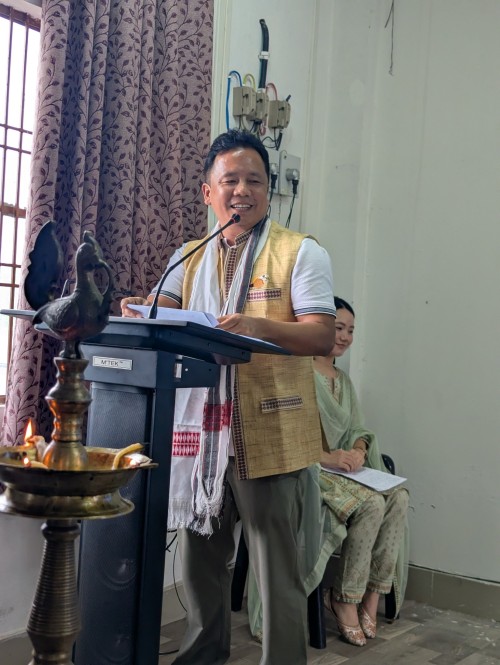
Guest of Honour Bengia Ajum, Senior Journalist and Assistant Editor of The Arunachal Times, delivered an insightful address on the growing influence of AI in everyday life and journalism. He pointed out emerging challenges, particularly the misuse of AI by individuals on social media to generate misleading content with unusually sophisticated language, which was rare in the past. He warned that sharing personal photos and data on platforms like Instagram and Facebook can be risky, as such data can be manipulated using AI to defame individuals or spread false information.
Drawing from his professional experience, he mentioned that many people have approached media houses with cases related to cybercrime and digital fraud. He advised students to verify information received on platforms like WhatsApp before forwarding, noting that the spread of misinformation can sometimes lead to communal unrest. At the same time, he acknowledged that AI has also positively contributed to journalism by aiding in fact-checking and improving content quality. He further informed the audience about the availability of Cyber Crime Police Station in Chimpu, Arunachal Pradesh where victims can lodge complaints.
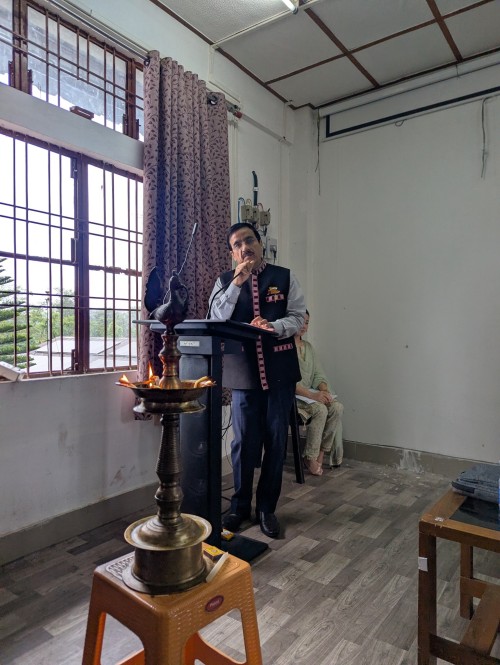
Addressing the gathering, Dr. M. Q. Khan, Principal of DNGCI, delivered a thought-provoking speech on the increasing role of Artificial Intelligence in facilitating cybercrime. He observed that while AI has brought convenience and efficiency, it has also made cybercrimes more sophisticated, accessible, and difficult to detect. He stressed that today’s digital environment demands not only technical awareness but also ethical responsibility.
He urged students to become responsible and informed users of the internet, emphasizing that individuals must strive to be “masters of the internet, not its slaves.” He further cautioned against the careless sharing of personal information, noting that even small pieces of data can be misused for fraud, identity theft, or manipulation. Highlighting the importance of digital discipline, he advised students to practice safe online behaviour, including the use of strong passwords, cautious engagement with unknown links, and critical evaluation of online content.
Dr. Khan also underlined the role of educational institutions in fostering cyber awareness and digital literacy among youth, stating that awareness is the first line of defence against cyber threats. He encouraged students to stay vigilant, continuously upgrade their knowledge, and contribute towards creating a safer digital ecosystem.
Earlier in the welcome address delivered by Dr. Tarh Achi, Assistant Professor, Department of Physics and NSS Programme Officer, DNGCI and the coordinator of the workshop. He highlighted the growing relevance of Artificial Intelligence, Cyber Security, and Digital Forensics in shaping national security, governance, and everyday life, and emphasized the importance of awareness among students.
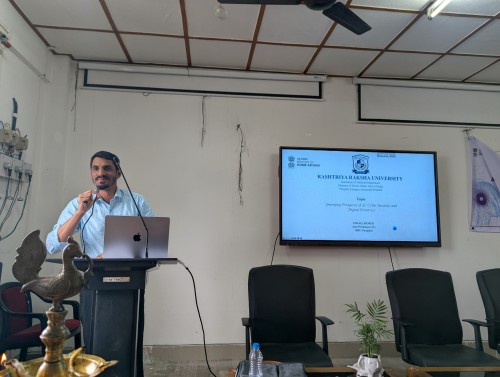
The technical session commenced with a lecture by Dr. Ishaq Ahmed, Assistant Professor and Head (IT), Rashtriya Raksha University. He presented an in-depth overview of cybersecurity and digital forensics, describing them as the “digital shield and investigative lens” of the modern technological world. He explained key aspects such as threat prevention, risk assessment, and incident response, along with tools like firewalls, VPNs, and multi-factor authentication.
He also elaborated on digital forensics procedures, including evidence collection, analysis, and reporting, and highlighted how cybercriminals collect personal data from everyday sources such as public Wi-Fi, e-commerce platforms, websites, hotels, and even connected vehicles. Such data, he noted, is often exploited for identity theft, financial fraud, and phishing scams. He also discussed the role of the Indian Cyber Crime Coordination Centre in combating cybercrime in the country, concluding with a strong message on digital awareness: “Be aware, be cautious, and think before you click.”
Another technical session was delivered by Rajkumar Meiraba Singh, Assistant Professor, Rashtriya Raksha University. He highlighted the mandates and academic vision of the University, an Institution of National Importance established in 2020, evolved from Raksha Shakti University. He informed that the Pasighat campus of the University in Arunachal Pradesh plays a significant role in expanding academic outreach in the Northeast, offering specialised education in police administration, security management, and forensic science.
He further elaborated that the University provides undergraduate, postgraduate, and diploma programmes with a strong focus on areas such as cyber security, border management, and policing, aimed at developing skilled and competent professionals for national security. Emphasising the institution’s commitment to excellence, he spoke about its role in promoting research, professional training, and policy development, along with providing career opportunities, internships, and job pathways in law enforcement and related sectors.
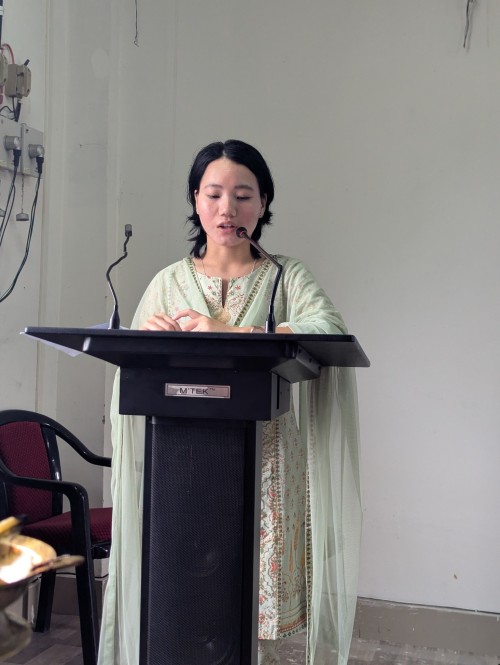
The programme concluded with a vote of thanks delivered by the host, Miss Sone Tayeng, a B.Sc. 2nd Sem. student of the Department of Chemistry, DNGCI.