- Home
- About
- Academics
- Admission
- Facilities
- Centers/Cells
- Career Counselling & Placement Cell
- Coaching for Entry in Services
- Computer Training Centre
- Entrepreneur Development Cell
- IGNOU Study Centre
- Information and Technology Cell
- Internal Complaints Committee (ICC)
- IQAC
- Remedial Coaching Centre
- Right to Information Cell (RTI-Cell)
- UGC Cell
- Women’s Cell
- Yoga & Wellness Centre
- Student Life
- Editorial Venture
- Alumni
- Gallery
- Informations
Update Details
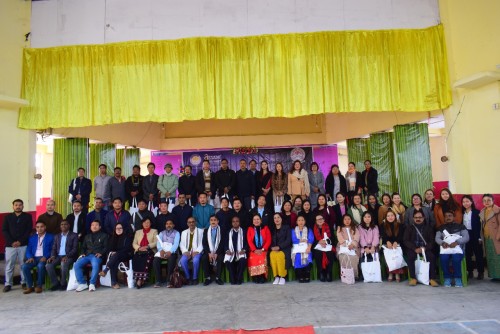
North East Educators Conclave on “National Education Policy (NEP) and its implementation”
31st January, 2024 Read More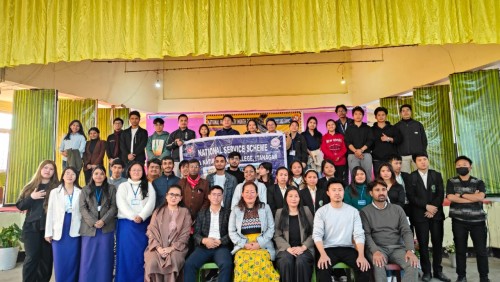
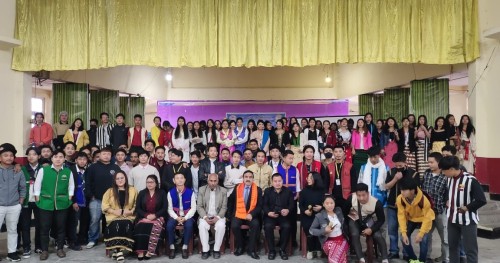
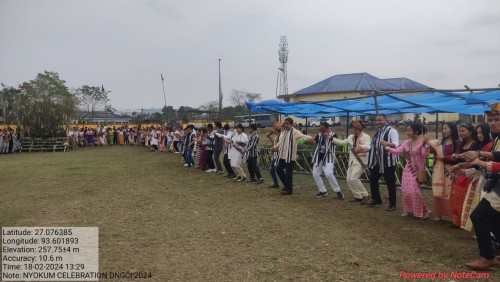
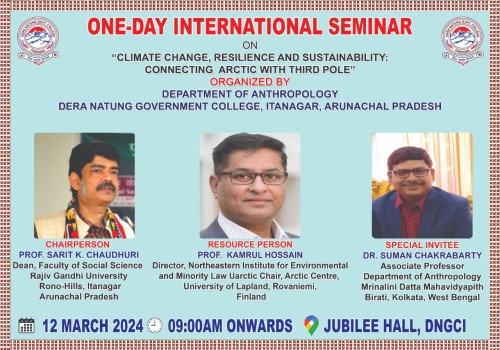
A one-day International Seminar on "Climate Change, Resilience and Sustainability Connecting Arctic with Third Pole"
12th March, 2024 Read More
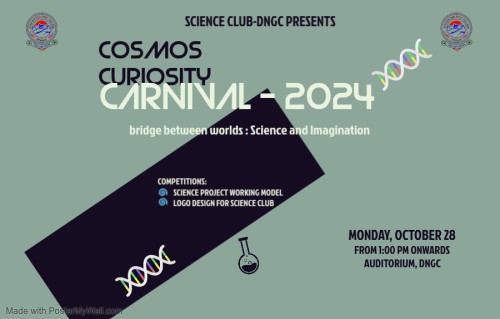
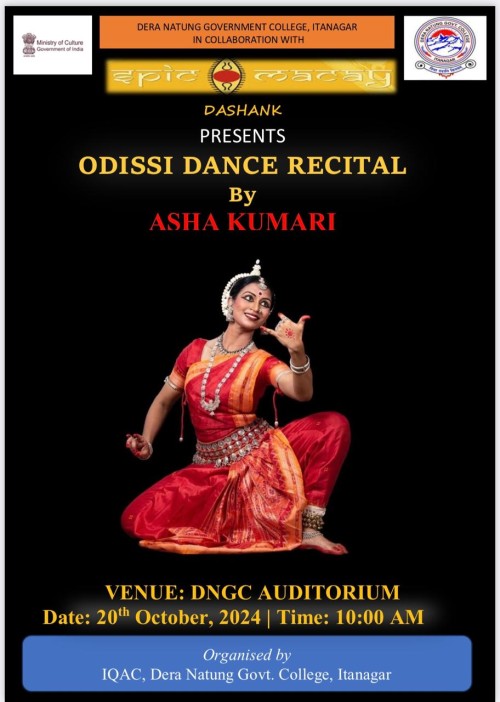
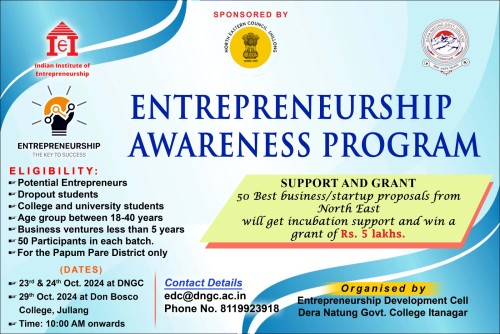
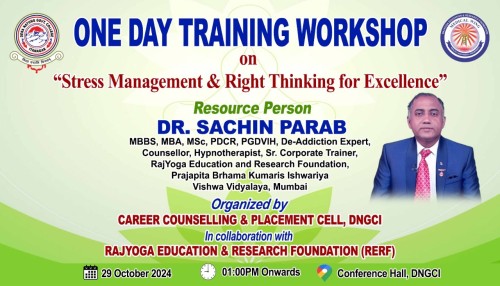
One-day training workshop on the theme ‘Stress Management and Right Thinking for Excellence’
29th October, 2024 Read More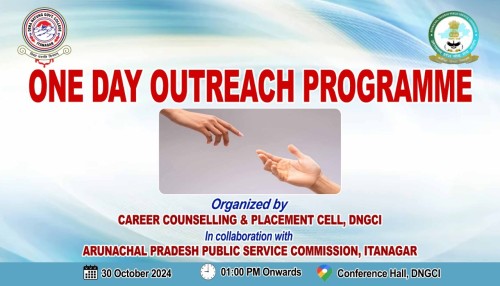
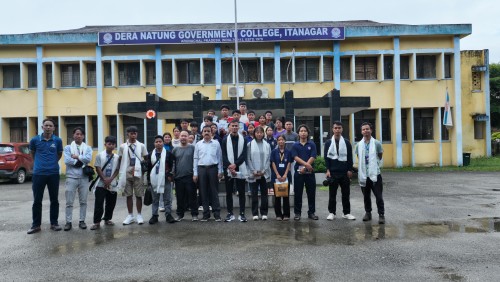


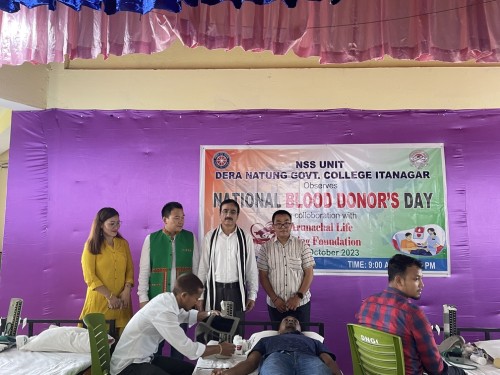
NCC Unit DNGC Organises Blood Donation Programme on Univeral Brotherhood Day
25th August, 2025 Read More


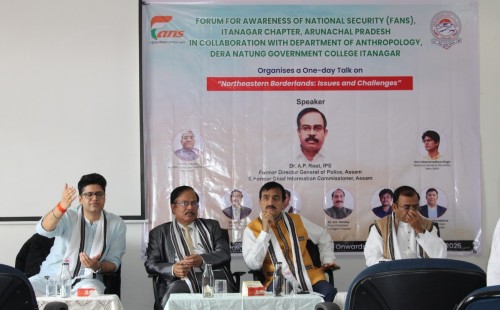


One Day Workshop on AI, IoT & Drone Technology on the occasion of National Science Day 2026
28th February, 2026 Read More

Workshop-cum-Paper Presentation on the Occasion of International Women’s Day
8th March, 2026 Read More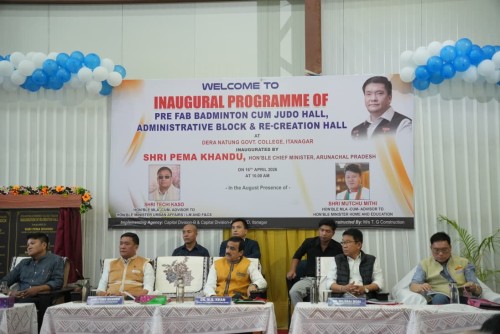
DNGC Inaugurates Badminton-cum-Judo Hall, New Administrative Block and Recreation Hall
16th April, 2026 Read More
Awareness Programme on Cyber Security, Drug Abuse, New Criminal Laws & Police-Public Relation.
1st September, 2026 Read More
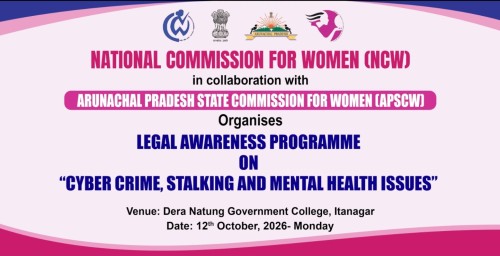
Legal Awareness Programme on Cyber Crime, Stalking and Mental Health Issues
12th October, 2026 Read MoreOrientation Program 2026
2nd Sep, 2026, 09:00 pm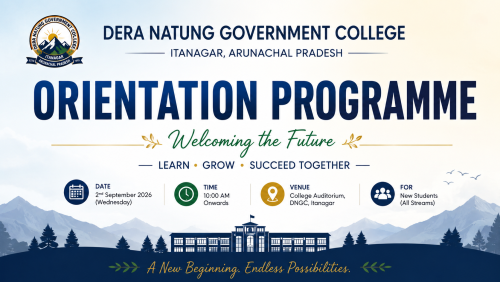
- Date: 02.09.2026
- Time: 09:00 AM
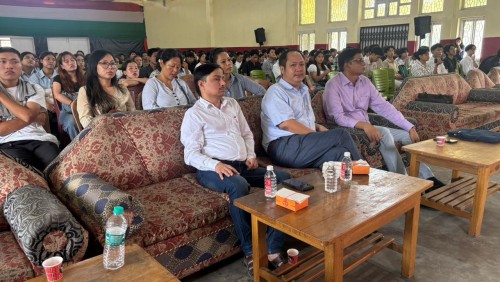
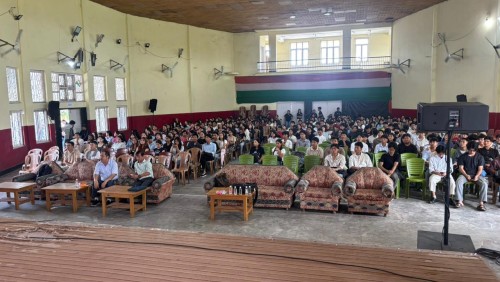
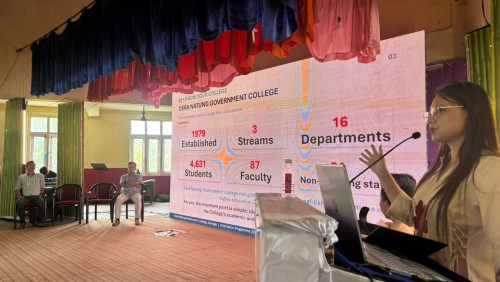
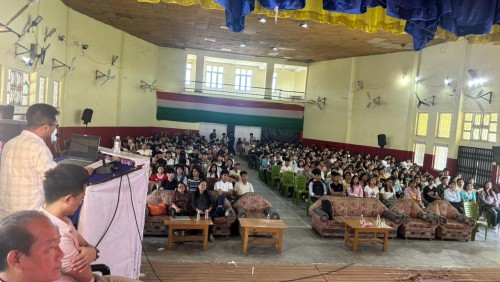
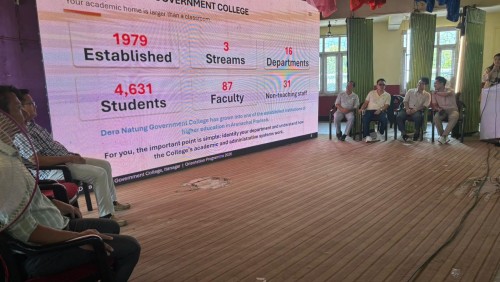
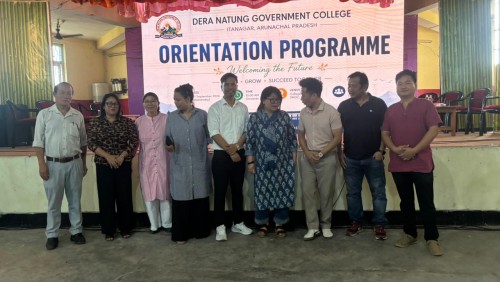
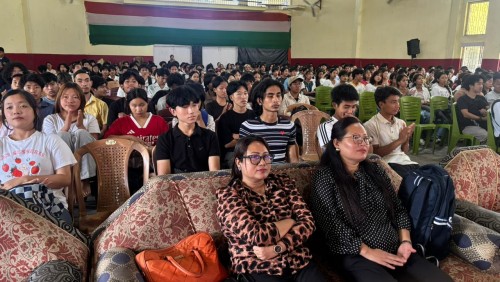
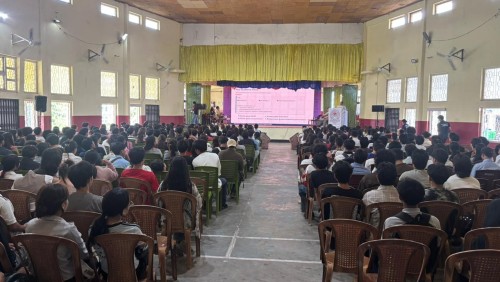
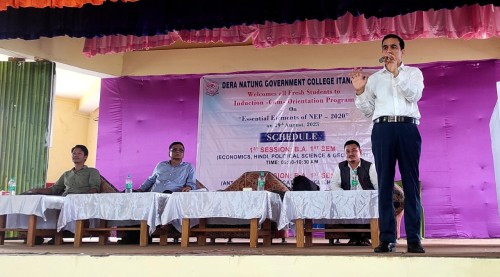
Dera Natung Government College (DNGC), Itanagar, organised its Orientation Programme 2026 on Wednesday, September 2, for the newly admitted students of B.A., B.Com. and B.Sc. Semester I for the academic session 2026-27. The programme was organised as a formal academic induction initiative of the College to warmly welcome the new students and familiarise them with the academic environment, institutional structure, examination system, National Education Policy (NEP) 2020, library facilities, scholarships and other aspects of college life.
The programme marked an important beginning for the new batch of students as they embarked upon their undergraduate journey at one of the longstanding institutions of higher education in the state. Designed to go beyond a conventional welcome programme, the orientation sought to help students understand the expectations, opportunities and responsibilities associated with university education and to make their transition from school to college smoother and more meaningful.
The programme was conducted in four discipline-specific groups to ensure that students received relevant academic guidance according to their respective streams and subject combinations. Group I comprised B. Sc. students from all subjects and B. Com. students, while Group II comprised B.A. students of Political Science, Education, Economics and Hindi. Group III included students of Geography, Sociology and Mass Communication, and Group IV comprised students of Anthropology, History and English.
Each group was given a dedicated orientation session featuring faculty members from the respective academic disciplines. The sessions provided students with an overview of their respective subjects, course structures, academic requirements and areas of study, while also giving them an opportunity to interact directly with experienced faculty members.
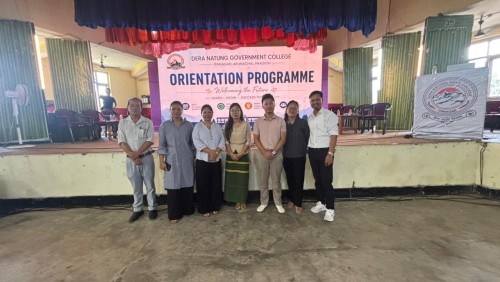
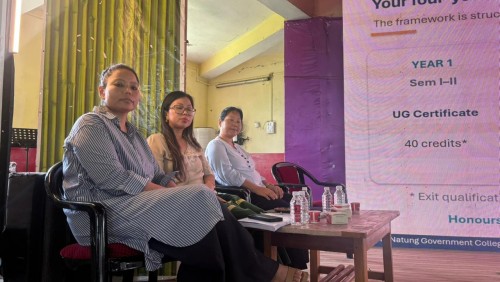
A major feature of the programme was the participation of an Expert/Orientation Panel comprising faculty members from the concerned departments. The panelists provided subject-specific academic guidance and responded to students' questions, enabling the newly admitted students to gain a clearer understanding of their chosen disciplines and the academic journey ahead.
The orientation also familiarised students with the academic framework under NEP 2020, including the structure of undergraduate programmes and the different components of the curriculum such as Major, Minor, Multidisciplinary Course (MDC), Ability Enhancement Course (AEC), Skill Enhancement Course (SEC) and Value Added Course (VAC). Particular emphasis was placed on helping students understand their subject combinations and the academic choices available to them within the institutional framework.
Another important aspect of the programme was guidance on the College's Student Portal. Students were sensitised about the importance of their Student ID (SID), registered mobile number and login credentials, which provide access to their academic profiles and other student-related services. Students were advised to preserve their login credentials carefully and use the portal responsibly for accessing important academic information and services.
The Library Orientation session introduced students to the role of the college library as an integral part of their academic life. Students were encouraged to make effective use of library resources and develop the habit of reading and independent learning, which are essential components of undergraduate education.
The programme also included a Scholarship Orientation session aimed at creating awareness among students about scholarship opportunities and the importance of timely application, documentation and compliance with the relevant requirements. Such guidance was intended to ensure that eligible students are able to make informed use of the financial support and welfare opportunities available to them.
The interactive Question-and-Answer sessions formed another significant component of the programme. Students were encouraged to raise questions relating to their courses, subject combinations, examinations, internal assessment, college facilities, academic progression and other matters concerning their new academic environment. The interaction provided students with an opportunity to seek clarification directly from faculty members and helped establish an open academic relationship between teachers and the new batch.
The Orientation Programme 2026 also sought to reinforce the idea that college education extends beyond classroom teaching. Students were encouraged to actively engage with the academic community, make use of institutional resources, participate in academic and co-curricular activities, and gradually develop the independence, discipline and sense of responsibility expected of university students.
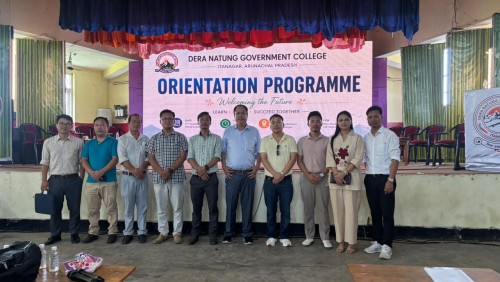
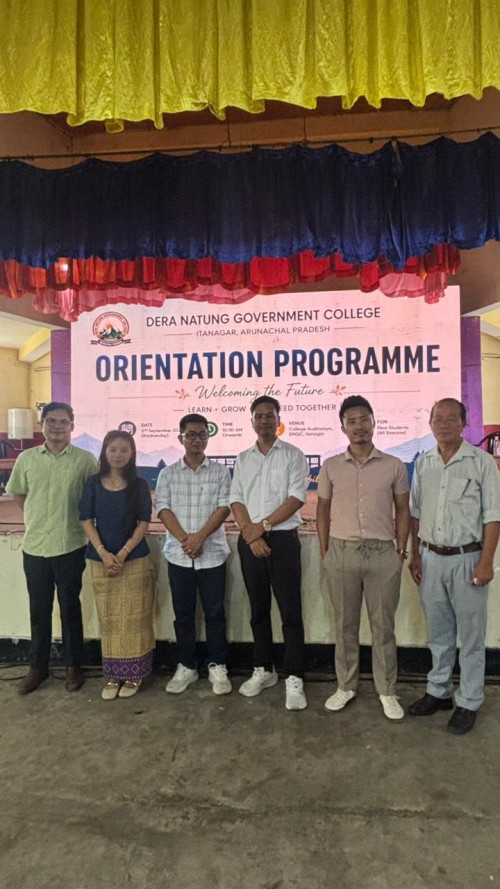
The Orientation Programme was a brainchild of Dr. Kumar Tok introduced in Dera Natung Govt. College, Itanagar during the session 2016-17. This year’s programme was organised under the guidance of Dr. Kumar Tok himself, with Mr. Goli Nyodu, Assistant Professor, Department of English, serving as Convenor and Dr. Bomter Dirchi, Assistant Professor (Guest), Department of English, serving as Co-Convenor. Faculty members from the different departments contributed to the programme as members of the Orientation/Expert Panel.
The Orientation Programme 2026 thus provided the newly admitted students with a comprehensive introduction to DNGC, its academic environment and the expectations of undergraduate study. More importantly, it offered the students an opportunity to begin their college journey with greater confidence, clarity and a sense of belonging.
Welcoming the new students into the DNGC family, the programme conveyed a simple but significant message: their admission marks not merely the beginning of a degree programme, but the beginning of a new phase of learning, growth and participation in an academic community.
The College expressed its hope that the new students would make the best use of the opportunities available to them, engage actively in academic life and contribute positively to the intellectual and institutional culture of Dera Natung Government College.